A minimal PDF
Two identical pages carrying the bones of an invoice in plain shapes, and not a word of text: a file of a dozen kilobytes, with no font embedded.
A print shop that has been buying fonts for twenty years owns a collection in Adobe's first font format, bought and paid for, that almost nothing reads any more. Replacing it means buying the same fonts a second time and accepting that a reprint will not quite match the original run. This engine reads that collection, so it keeps working instead of becoming a reason to change nothing.
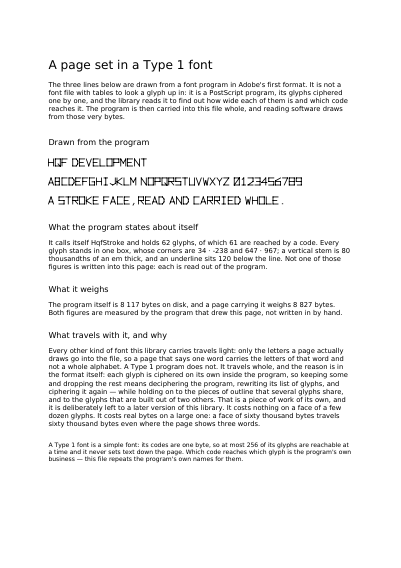
Everything the page says about that font — its name, how many shapes it carries, the rectangle they stand in, the thickness of a downstroke, where an underline belongs — was read out of the font itself as the page was being drawn, so the page cannot describe a font other than the one it is set in. It also says plainly what this old kind costs: it travels whole, where every other kind travels only the letters actually used.
Nothing is left out and nothing is simplified: this is the program exactly as it runs, for the developer who uses this library. The third is the description itself: a plain list of what the page has to say, which is what the service is sent.
Read the Rust source Read the Python source Read the JSON source
Two identical pages carrying the bones of an invoice in plain shapes, and not a word of text: a file of a dozen kilobytes, with no font embedded.
The same document written twice, the ordinary way and with its first page moved to the head of the file, with how much of each must arrive before page one appears.
The same document written twice, plainly and packed, with what each one weighs and what the packing saved.
A page that opens with nothing typed and prints like any other, and that asks the reading software to leave its text where it is. Every word of it is scrambled inside the file.
A page nothing shows until its password is typed in: no first line, no preview, no picture of it anywhere. The password is given on the example's page, to be tried.
Text set in a font embedded in the file, cut down to the letters actually used, and still searchable, copyable and readable aloud.